Recently I was asked to share why the Tillman IGNITE project is important to me. It's been a busy couple weeks, so I procrastinated, of course. But, because I didn't have time to wordsmith, I found I was pretty darn honest with my response. And in the interest of using this platform more fully than I have in the past, I thought I'd share. So...
Lots of reasons I'm drawn to outdoor ed, experiential ed,
and youth gardening. First, we HAVE to equip our kids to deal with
tremendous environmental challenges--climate change, pollution,
declining non-renewable resources, and a global population that
exacerbates all of the aforementioned problems. Wow. How do we help our
kids deal with all of that? I am not totally sure, but I do know that
humans don't work to save what they don't love and that a space like
IGNITE will inspire a connection to and hopefully love of nature. That
is a necessary precursor to solving problems that will also require a
good grasp of how systems work. And nature immersion is a great way to
begin understanding systems and the complex interactions within and
among systems. It seems to me that people are waking up to the fact that
we need to raise "systems thinkers" in order to solve problems
associated with climate change, and move away from education that
fosters mainly reductionist thinking.
Why else? Well, kids
need to know where food comes from and how much work it takes to
produce it. They need to know that cheap food isn't all that cheap if we
count the cost accurately (environmental and social). IGNITE's
intensive/functional plants space + our current food gardens will help kids
learn the basic, foundational skill of growing food. If they know how to
grow food, they have the means of survival if needed and if not, they
at least will respect the value of food.
Why else? This
one is a bit harder to explain, but I'll give it a shot. I think the
root cause for many of our social problems is the same as for our
environmental problems. The same mindset that develops a food system
that creates so many negative unintended consequences (water and air
pollution, antibiotic resistance, inhumane treatment of animals,
inadequately compensated farmworkers, soil erosion on a massive scale,
etc.) is the same as that which has produced and perpetuated systemic
racism. I don't think it's a stretch to think that teaching the current
Tillman kids to care about nature, and to unlearn the "otherness" of
nature, will transfer to other areas of life. Our culture is so steeped
in otherness, defined as separation coupled with domination, that
anything we can do to counterract that narrative will be beneficial.
Would it be better if we could also partner with a school district in,
say, North St. Louis county to help kids learn that just as we are
connected and interdependent with nature, we are connected and
interdependent with folks in St. Louis despite our de facto segregation?
Yep, but we don't have the foundation set for that yet. What we will
have with IGNITE immediately, is a space to directly engage with nature
and learn that we are a part of natural systems, interdependent rather
than here to subdue nature. And we will have a space that will encourage
conversations about our interconnectedness with other people and other
places as well---i.e. food systems and watersheds are great jumping off
points for that.
And finally, I think it's shameful to
keep kids indoors all day, every day except for a 20-minute recess. Kids
need to be outside. And IGNITE will be a space that makes teachers want
to take kids outside. And that will be awesome.
Tuesday, December 31, 2019

Tuesday, July 17, 2018
Rejuvenation from Road Trip to Ithaca
I said yes to a trip last week to a youth gardening conference at Cornell to see if it would reignite this burned out volunteer. I'm happy to report that it did, and that I got to go with one of my best friends. I also went on the trip because I made a promise to myself in April of this year that for the next year I'd be intentional about spending time with inspiring women. I'm doing pretty well so far. I've got a couple of other trips in the works and jumped at this chance. And funny enough, a youth gardening conference is full of inspiring people, most of whom happen to be women.
We drove for 17 hours to get to Ithaca in one day, and ended up driving through the most beautiful country along the way in the dark. At the end we were really tired, and it was really hard. I never want to drive that far in one day ever again. Luckily, we passed through lovely New York State and Eastern Ohio a few days later in the daylight. I loved Ithaca, and wished I had several more days there!
 |
| The one sightseeing excursion on the drive to Ithaca was a pitstop at Lake Erie. Very cool stop not too far off the highway. |
 | ||||
Cornell. Is. Awesome. As the plumbers at our hotel said, it seems like Cornell owns the whole town of Ithaca. And it's lovely. These pictures are at the Cornell Botanic Garden. The campus is huge, and I would love to be a student there if I had a do-over. So awesome. (No offense, Truman.)
|


 |
The restaurant that inspired many of my cookbook purchases is in Ithaca. Moosewood. Who knew?! I did not...or maybe I did but forgot. Either way, dinner here was a must. I loved every pescatarian bite. The four seasons were adorning the walls at our first food stop on the way back home, at Tossed in Corning, NY. I don't think it's true but it feels like vegetarian restaurants are to New York what BBQ restaurants are to Missouri: easy to find and delicious. Either way, it was great fuel for the drive (which we split over two days this time, super smart of us). |
Thursday, December 8, 2016
Time for an Honest Dialogue
Like a lot of people, I've been thinking a lot about politics, government, and our country in general in the month since the presidential election. Anyone who knows me won't be surprised to hear that I wasn't happy about Donald Trump's election. I've got some strong misgivings about Trump's cabinet choices, but have been trying to adopt a wait-and-see attitude. And I've been trying to think of what good could come out of this presidency.
Thinking of potential silver linings of the Trump election, maybe one is this: that our country will finally have a dialogue, a reckoning, about the racism and sexism that continue to pervade our country. Because lately, the talk has not been abstract about systemic "isms" and white or male privilege. It's clear-cut, fear-based and violent actions of individuals that we are hearing about. If we are paying attention, we currently see reports of individual acts of racism and misogyny being reported at an alarming rate since the election. There has been a documented uptick in reported hate crimes across the country. I read this week that NYC had a documented increase in hate crimes of 35% this past year. In my own town, I've come across reports of intimidation based on race at my son's high school, at my own high school alma mater, and at a local highly-respected university. And a mom at my son's elementary school shared that her cousin was assaulted on the street the day after the election by a man saying "It's official! We can grab 'em now!"
It seems to me that Trump's election rhetoric has made a lot of folks feel that they've been given license to say and do things that were completely unacceptable a month ago. What has long been simmering beneath the surface, with an implicit rule that certain sentiments should not be uttered or acted on in one's public life, has now been exposed. We can no longer use our privilege to ignore the reality for people of color and for women. These reports are in our face, and we shouldn't turn away. System sexism and racism can be ignored by exercising privilege: you don't have to drive through certain neighborhoods to see how "the other half" lives, you can consume as much media as you like and pick and choose whose perspectives you get exposed to, you can pretend that things are better than they are. But blatant, hateful acts perpetrated by individuals at an increasing rate cannot be explained away or brushed under the rug.
So, white people who want to consider themselves "woke": be brave and help shape the conversation among your white friends and neighbors. Talk to people who might not agree with you, don't just preach to the choir. And men who want to be one of the "good guys": listen to women's perspectives, seek them out in your media choices and conversations. And all of us with some measure of privilege need to consider that to make things right in this country, we will probably have to give up some stuff--starting with some of our unspoken and unconscious assumptions about the way the world should work. Maybe if we start to reckon with the fact that these individual acts of violence we're seeing are borne out of a systemically racist and sexist culture, and that we've all had a hand in perpetuating this culture, we will begin to heal.
I hope and pray that we will be brave as a community of Americans. I want to be proud of my country and my countrymen. And while the election has impressed upon me the need to pay attention to current events and weigh-in on issues with my elected officials, it has also impressed on my the importance of having brave conversations with the people I come into contact with. Politics and political action are important, without them we wouldn't have roads, or libraries, or labor laws. But conversations are the links in our culture, and they help shape the narrative of our culture. I don't claim to be the most brave or even curious conversationalist, but I'm gonna try. Never in my life have I felt it so imperative to engage in honest conversations about our country and what it is and could be. I have a feeling a lot of other people feel the same way. I sure hope so.
Monday, February 29, 2016
Pastured Poultry Means More than Free Range
I've known for a long time that "Cage Free" on a carton of eggs doesn't mean much. That "Cage Free" chickens have marginally better living quarters than the chickens whose eggs are sold without any fanfare at the grocery store. But I thought that "Free Range" meant something more, that it meant what it sounds like (chickens roaming outside for food) and so I've been shelling out the cash for years in support of that idea. Turns out that I was duped. "Free Range" means that there is a tiny bit of enclosed outdoor space for thousands of birds to compete for the opportunity to check out. They are still crowded. They are still indoors most of the time. They don't get to munch on bugs found in a pasture (the bugs that are full of the nutrients that make eggs such a great food source). And they still contribute to ill effects on the environment.
I learned today at http://lexiconofsustainability.com/ that "Pastured Poultry" is what I need to search out on my egg cartons. It's the latest in a series of efforts to define how food is raised so that consumers can rest assured that they are indeed getting what they pay for. "Pastured Poultry"--chickens who run around in a real pasture and eat bugs the way they're made to do. Cool. And totally worth the money.
And "Lexicon of Sustainability"--a wonderful project that I am just learning about that aims to give back to words their power. To make sure that consumers and farmers, and teachers, and policymakers speak a common language. So we understand the costs and the benefits of the food we put in our mouths. And so we can advocate more effectively to bring about the food system we so desperately need. Whether you're a foodie or a concerned parent, I hope you'll check out the website. I'm glad I did, it's inspiring!
I learned today at http://lexiconofsustainability.com/ that "Pastured Poultry" is what I need to search out on my egg cartons. It's the latest in a series of efforts to define how food is raised so that consumers can rest assured that they are indeed getting what they pay for. "Pastured Poultry"--chickens who run around in a real pasture and eat bugs the way they're made to do. Cool. And totally worth the money.
And "Lexicon of Sustainability"--a wonderful project that I am just learning about that aims to give back to words their power. To make sure that consumers and farmers, and teachers, and policymakers speak a common language. So we understand the costs and the benefits of the food we put in our mouths. And so we can advocate more effectively to bring about the food system we so desperately need. Whether you're a foodie or a concerned parent, I hope you'll check out the website. I'm glad I did, it's inspiring!
Tuesday, February 16, 2016
Tillman IGNITE has me all fired up!
The last couple of weeks were a typical story-line for me when it comes to (not) writing in this blog. So many awesome things happened that would be worthy of a post, but they happened in rapid succession and then I posted about none of them. So....turning over a new leaf right now.
I've been working for about three years now at Tillman Elementary in Kirkwood, MO to support an increase in outdoor, experiential education at the school. The efforts are really starting to pay off, as seen by some changes to the grounds, more teachers using these spaces this fall, and the launch of the Tillman IGNITE campaign. IGNITE is the campaign to transform Tillman's backyard from a boring blank rectangle that lacks imagination into a dynamic and engaging learning space that inspires creativity and curiosity.
Students, parents, and teachers helped create the vision; we hired a design firm to flesh out the plans and put this vision on paper; and parents helped design our marketing materials and our website. We learned that this is literally a million dollar dream, and that we need $300,000 to complete Phase 1. The PTO is our partner and included us in the recent PTO trivia night with a paddle raise devoted specifically to Tillman IGNITE. We didn't really know what to expect, but we rolled up our sleeves and worked hard to promote the project and garner support in the days preceding the paddle raise. And guess what?! IGNITE supporters stepped up and donated $34,000 in under 10 minutes at trivia night! Wow! Talk about an overwhelming moment. Add that to the $51,000 in funds that we already had, and we are almost 1/3 of the way to our Phase 1 goal!
And it's not just the funds raised that helps make the goal seem achievable, but it's the way that people came together to support an all-around good idea. And their show of support will show potential grant funders that Tillman is a good investment. My hand is cramping from signing thank you notes, because so many donors, large and small, have already contributed. This project will be an asset to both the school and the community, and I can't wait to be able to break ground. If you're so inclined, please donate at tillmanignite.org today!
I've been working for about three years now at Tillman Elementary in Kirkwood, MO to support an increase in outdoor, experiential education at the school. The efforts are really starting to pay off, as seen by some changes to the grounds, more teachers using these spaces this fall, and the launch of the Tillman IGNITE campaign. IGNITE is the campaign to transform Tillman's backyard from a boring blank rectangle that lacks imagination into a dynamic and engaging learning space that inspires creativity and curiosity.
Students, parents, and teachers helped create the vision; we hired a design firm to flesh out the plans and put this vision on paper; and parents helped design our marketing materials and our website. We learned that this is literally a million dollar dream, and that we need $300,000 to complete Phase 1. The PTO is our partner and included us in the recent PTO trivia night with a paddle raise devoted specifically to Tillman IGNITE. We didn't really know what to expect, but we rolled up our sleeves and worked hard to promote the project and garner support in the days preceding the paddle raise. And guess what?! IGNITE supporters stepped up and donated $34,000 in under 10 minutes at trivia night! Wow! Talk about an overwhelming moment. Add that to the $51,000 in funds that we already had, and we are almost 1/3 of the way to our Phase 1 goal!
And it's not just the funds raised that helps make the goal seem achievable, but it's the way that people came together to support an all-around good idea. And their show of support will show potential grant funders that Tillman is a good investment. My hand is cramping from signing thank you notes, because so many donors, large and small, have already contributed. This project will be an asset to both the school and the community, and I can't wait to be able to break ground. If you're so inclined, please donate at tillmanignite.org today!
Sunday, September 13, 2015
Let's Do Something
I’m writing this to encourage white people in my home town of St. Louis to engage in fixing messed up systems fraught with racial bias and systemic inequality. I’m writing to recommend they attend an awesome event that will help change St. Louis systems so that racial equality actually has a chance here. I’m also writing to challenge any white folks who don’t already see that our society is structured so that more advantage is conferred to light-skinned people than dark-skinned. I challenge these folks to open their eyes and see the truth, then move forward and help do something about it.
First of all, to my white brothers and sisters who don’t see that there’s a problem that’s all that bad. I’ve been avoiding you for awhile. I haven’t wanted to wade into the murky water of trying to convince you of systemic or institutional racism. Or talk about white privilege or white blindness. I didn’t want to have to spend time digging around for facts to support my position. I didn’t want to alienate anyone either. But my conscience has been nagging me to speak up. So I’ll tell you a few things I’ve noticed with my own eyes and some I’ve learned from others’ research.
For me, one of the most striking things about St. Louis is how segregated we are. This summer I got to work on an organic farm, located in Ferguson, about 25 minutes north of my home in Kirkwood. A couple times I commuted via a North-South artery instead of the freeway. Kirkwood is a predominately white suburb, and Ferguson, well, everybody’s heard of it. About halfway to Ferguson, I would drive through a famously diverse municipality, where the pedestrians and drivers were a variety of hues. Then, I’d cross the unofficial redline and I’d be the only white person I saw again until I arrived at the farm. From my house to the farm, the shift from white to black was pretty dramatic. And it wasn’t just skin color that shifted from one part of town to the other. You’d have to be blind not to notice where signs of affluence fell away, and how this correlates with the skin color of the neighborhood. Goodbye well-maintained turn of the century farmhouses and fancy restaurants, hello liquor stores, pawn shops, and payday loans.
A lot of people who come here from other cities talk about how shocking it is, the degree to which blacks and whites are cut off from each other in St. Louis. The implications of de facto segregation (which is what we’ve got here in St. Louis) are so depressing. Segregated housing is like an enzyme in a body that causes a cascade reaction, with one negative effect becoming the cause for another and another. Long commutes by bus to low wage jobs for so many African Americans--that’s a negative effect of segregation. The ability of whites to not pay attention to black people’s reality--that’s another negative effect. So many negative effects compound over time, and we get entire neighborhoods that are poor, entire school districts that are struggling, and prisons that are chock full of black people. And so many people that would prefer not to think about it.
I’ve spent a lot of time volunteering in a lot of different St. Louis schools over the years. Some in Saint Louis City and some in the county. I’ve been in schools where teachers struggle to keep enough paper and pencils in stock for their students, where textbooks are old, and half the kids might go hungry on the weekends. These schools are full of black kids. I’ve been in private schools that have campuses to rival universities and whose students pay more for elementary school than I did for college. These schools are not full of black kids. And in the schools where my kids go, there there are smartboards in every classroom and school-issued iPads in every backpack. These public schools are not full of black kids.
And what about the statistics showing how well we as a community are caring for our black youth? Starting from birth, there’s a sharp divide. Infant mortality--black babies are 3.3 times as likely to die as white babies in the St. Louis area. And when black kids enter the school system in Missouri, they are 7 times as likely to be suspended in elementary school than white kids, and twice as likely than whites to end up dropping out before graduation. And to top that off, the federal Justice Department just released a scathing report about St. Louis Family Court’s disparate treatment of black and white youth who end up in the judicial system. Put all these things together and tell me that black lives really truly matter in this culture. Doesn’t this break your heart? And don’t you see how this situation is hurting all of us in the long run?
It’s time we stopped looking away from the burdens that disproportionately impact our black brothers and sisters. It’s time to roll up our sleeves and fix our society, which was founded on overt racism interwoven with very lofty ideals. I don’t expect us all to have the same ideas on how to fix things, that’s crazy. But I do think it’s a moral imperative and a civic duty to open our eyes to the truth and engage in repairing our society. I know it’s difficult work, both emotionally and practically. It takes time and energy to learn about the systems that shape our culture, and the work to make change can be slow and sometimes painful. But I also know that to walk through the guilt that comes from seeing one’s own culpability in perpetuating unjust systems and come out the other side ready to take action is so good. Won’t you join me?
On November 1, 2015, Metropolitan Congregations United (MCU), an interfaith community organizing group, and two other community organizations will bring 1,000-1500 St. Louisans together with key St. Louis leaders to help give teeth to recommendations in the Ferguson Commission Report. This report was mandated by Governor Nixon after the shooting of Michael Brown forced the governor to confront the St. Louis region’s racist reality. The writing of the report was required, but there is no mandate to actually do anything with the Commission’s 12 months’ of research and subsequent report. That is where we, the citizens, come in. We have to make sure that the research, the documenting of our current reality, wasn’t done in vain. We have to help our political leaders develop the political will to work to bring about racial equality in our city.
I’ve decided to help by plugging in with MCU, and this may be the organization for you as well. I had the privilege of first working with MCU a decade ago, and it is really an incredible organization. Today, I’m reconnected with them, engaged in work to bring us closer to the vision of a community where black lives really do matter, not just on yard signs but especially in our school systems and our judicial systems. I love MCU, and I’m confident that it’s a good use of my time to work on change-making with them. MCU gets things done, and has a tried-and-true method for doing so. This organization sees a problem and researches the heck out of it. They examine the power structures that underlie the problem, build relationships with the folks who have the ability to make changes related to the problem, and then publicly ask these decision makers for very specific actions in front of a very large, racially diverse crowd. Because they’ve laid a ton of groundwork, developed many relationships, and packed the house, more often than not the leaders decide to do what’s right. It’s awesome, and empowering, and fun to see that ordinary people do have great collective power.
MCU and their partners are busy preparing for a big gathering like the one described above, on Nov. 1. Leaders like Mayor Slay, superintendents of various schools, city and county council folks, police chiefs, and state legislators will be in attendance. MCU will ask these leaders to commit to specific actions that support racial equity in our city, using the priorities laid out in the Ferguson Commission Report. Hopefully these leaders will feel the pressure of more than 1000 St. Louisans of all skin tones asking for change, and say yes to making our city better for the black citizens, which will actually make it better for us all. Then, after some well-deserved celebrating, we can begin the hard work of holding folks accountable:) So, if you know that there is much work to be done to make St. Louis a great place to live for everyone--maybe you’ve wanted to help but haven’t known how--come to the meeting on November 1st. There is power in numbers and you are making a difference just by showing up. But fair warning, you might just get hooked and want to do more than attend a meeting.
November 1 Public Meeting
Place: Busch Student Center-St. Louis University
20 North Grand, St. Louis, MO 63103
Free parking: Laclede parking garage across the street
Time: 3:00-4:30 pm (doors open at 2 pm)
Monday, December 15, 2014
Next Generation Science Standards
Give the pupils something to do, not something to learn, and the
doing is of such a nature as to demand thinking; learning naturally
results.
I learned a lot about the Next Generation Science Standards last week, and found a resource that I thought anybody in elementary education (classroom teacher, outdoor educator, professional development facilitator, principal, anybody) would find really beneficial and cool. Paul Anderson, Montana's 2011 Teacher of the Year, a science teacher at Bozeman High School, created a ton of really good science videos for students and teachers. I spent some time checking out his website, bozemanscience.com, and really liked the videos about the Next Generation Science Standards. They're for teachers, under 10 minutes long, and do a great job explaining science in a way that makes teaching it easier. For me, it was a clear, concise refresher on overarching concepts that apply to many specific content areas in science. For teachers with less of a science background, these videos simply explain what we want kids to know and ways to do that at different levels of development.
I learned about these videos at a curriculum planning workshop I got to attend last week.
I felt really fortunate that, although a parent volunteer and not on staff, I was invited to take part in an elementary science curriculum planning session. This particular session built on some visioning that took place in the fall, where teachers painted a picture of what they wanted elementary science to look like in the school district. I learned that the teachers had a vision of student discovery, exploration, and wonder. And that they care about sustainability. But that they wonder about how to realize their vision despite the demands of testing and day-to-day constraints.
The school district's new science facilitator shared his philosophy of science education for the elementary years and how this blends with the Next Generation Science Standards. He talked about the importance of focusing on broad concepts, like teaching kids how to question; the basics of the scientific method; or learning how to recognize patterns, understand cause and effect, and make predictions about systems. He talked about the need to concentrate on these rather than focusing so much on content at this stage. He talked about designing an experience, trusting in children's innate curiosity and purposeful playfullness.
Well, I think this is exciting stuff, to be sure. As one participant remarked during the workshop--almost all educators enter the profession desiring to create learning experiences like the one John Dewey described in the quote at the top. But this can be difficult due to constraints put on teachers, and downright intimidating to some teachers if they don't have a lot of science education themselves. This is where these science videos come in. They turn the 400 page document (nextgenscience.org) containing the entire framework of science standards into easily understood chunks of information. They simplify complex topics, they're engaging, and I think they will quickly increase teachers' comfort level and ability in teaching science. Check them out, and let me know if you think they're as cool as I do!
Stop there, or read on below for some more tidbits about the curriculum meeting I attended. This meeting gave me hope for both my son who has a few more years in elementary school, and for his teachers who want the freedom to create learning experiences that help kids maintain an attitude of exploration, discovery, and wonder.
Some of the ideas that resonated with me from the workshop:
-John Dewey
I learned a lot about the Next Generation Science Standards last week, and found a resource that I thought anybody in elementary education (classroom teacher, outdoor educator, professional development facilitator, principal, anybody) would find really beneficial and cool. Paul Anderson, Montana's 2011 Teacher of the Year, a science teacher at Bozeman High School, created a ton of really good science videos for students and teachers. I spent some time checking out his website, bozemanscience.com, and really liked the videos about the Next Generation Science Standards. They're for teachers, under 10 minutes long, and do a great job explaining science in a way that makes teaching it easier. For me, it was a clear, concise refresher on overarching concepts that apply to many specific content areas in science. For teachers with less of a science background, these videos simply explain what we want kids to know and ways to do that at different levels of development.
I learned about these videos at a curriculum planning workshop I got to attend last week.
I felt really fortunate that, although a parent volunteer and not on staff, I was invited to take part in an elementary science curriculum planning session. This particular session built on some visioning that took place in the fall, where teachers painted a picture of what they wanted elementary science to look like in the school district. I learned that the teachers had a vision of student discovery, exploration, and wonder. And that they care about sustainability. But that they wonder about how to realize their vision despite the demands of testing and day-to-day constraints.
The school district's new science facilitator shared his philosophy of science education for the elementary years and how this blends with the Next Generation Science Standards. He talked about the importance of focusing on broad concepts, like teaching kids how to question; the basics of the scientific method; or learning how to recognize patterns, understand cause and effect, and make predictions about systems. He talked about the need to concentrate on these rather than focusing so much on content at this stage. He talked about designing an experience, trusting in children's innate curiosity and purposeful playfullness.
Well, I think this is exciting stuff, to be sure. As one participant remarked during the workshop--almost all educators enter the profession desiring to create learning experiences like the one John Dewey described in the quote at the top. But this can be difficult due to constraints put on teachers, and downright intimidating to some teachers if they don't have a lot of science education themselves. This is where these science videos come in. They turn the 400 page document (nextgenscience.org) containing the entire framework of science standards into easily understood chunks of information. They simplify complex topics, they're engaging, and I think they will quickly increase teachers' comfort level and ability in teaching science. Check them out, and let me know if you think they're as cool as I do!
Stop there, or read on below for some more tidbits about the curriculum meeting I attended. This meeting gave me hope for both my son who has a few more years in elementary school, and for his teachers who want the freedom to create learning experiences that help kids maintain an attitude of exploration, discovery, and wonder.
Some of the ideas that resonated with me from the workshop:
- Young kids learn while playing, and their play almost always has a purpose. Educators can design science-related experiences that tap into learning through play. Check out the Periodic Table of Play to see different ways play can be classified...
- Currently, we generally begin designing an experience with a consideration of content. (Content is what we want kids to learn, i.e. the parts of a plant or the process of the water cycle.) At the elementary level, content is less important than learning to use scientific practices and learning to understand the broad, cross-cutting concepts which encompass the content students should know when they leave high school. Approaching a learning experience this way makes it more likely students will have a sense of wonder, discovery, and exploration. Basically, the science facilitator's message was this: Get kids comfortable with scientific method and argument and help them understand the cross-cutting concepts. Worry about specific content when kids are of an age where the details will begin to stick.
- If you want teachers to feel free to design learning experiences that emphasize Practices and Cross-Cutting Concepts, the grading rubric needs to reflect that. We worked on this a bit. Whew. As if I didn't already think teachers jobs were hard...
- There needs to be some sort of coordination among grade-levels so that the kids' learning in science builds on previous years' learning without too much overlap in content or activities. This is the nitty-gritty, and it will be interesting to see what happens when the planning gets to this stage!
Wednesday, September 10, 2014
Benefits of School Gardening
Denver Urban Gardens, or DUG, compiled some research findings about the benefits of school gardens. This is a great resource for those of us who are school garden advocates. The studies cited were all published between 2002 and 2012, so there is some fairly current stuff in there. If you're not already convinced that school gardens should be widely used in every school, check out the link below.
If you are already an advocate, this paper looks like a great resource to print and share with folks who aren't so sure about the idea of gardening with students. It's short, with bullet points sharing the benefits in the areas of academic achievement, social and emotional health, physical health, and benefits to the school and community at large. For those wanting to know more, it includes a list of the sources cited in the paper. Check it out!
"Benefits of School Gardens" compiled by Denver Urban Gardens
If you are already an advocate, this paper looks like a great resource to print and share with folks who aren't so sure about the idea of gardening with students. It's short, with bullet points sharing the benefits in the areas of academic achievement, social and emotional health, physical health, and benefits to the school and community at large. For those wanting to know more, it includes a list of the sources cited in the paper. Check it out!
"Benefits of School Gardens" compiled by Denver Urban Gardens
Friday, September 5, 2014
Race and Our Community
So, I live about 20 minutes from Ferguson in a pretty darn white suburb of St. Louis. Since Michael Brown was killed, I can't stop thinking about that whole situation--but even more so just how entrenched this city is in de facto segregation and systemic racism. I've been reluctant to write about it on here, in part because my feelings of sadness and confusion about how to make a difference have impeded any ability I might have to write something cohesive. But also, if I'm honest, because I am nervous about ruffling feathers. I am definitely non-confrontational.
The title of this blog is "Kids, Community, and Food", and I usually write about food or kids growing food. But community is in the title too, and it's it's in there because I believe so strongly in the power of gardening in groups to build healthy communities. And because I believe that we have to have strong, healthy community groups in order to solve the complex social and environmental problems that our children are inheriting. Mike Brown's death highlights just how unhealthy our community here in St. Louis is, and the outrage and sadness that bubbled over in Ferguson has been there a long time because our community is chronically ill with systemic racism.
I still don't know what to say, exactly. But I do know that I don't want things to just calm down and go back the way they were. I want things to change. To be better. I want to live in a city without a redline. I want to live in a city, where when I choose which neighborhood to live in based on the quality of the school district, that school will also be racially diverse. That is not the city I live in today. And I did choose a well-to-do, mostly white school district when we moved back to St. Louis a couple years ago. It's been a long time since I lived in a diverse suburb of St. Louis, studied environmental justice in grad school, and experienced the power of community and school gardening to bridge racial divides.
Today I find myself gardening in groups of mostly white people through my work to integrate sustainability education into the curriculum at Tillman Elementary. Of course, it's great, because community gardening is almost always awesome. While I'm confident we are laying down experiences that will help the kids involved learn to care for the Earth, I don't believe that this will have any impact on dismantling racism unless we make social justice an explicit part of what we teach. There are lots of avenues for this, especially through the lens of environmental justice. I am certain that issues of fair food distribution will come up, because the kids at Tillman are so wonderfully kind-hearted. But will we adults have the courage to take it a step further and examine who is most likely to be "food insecure" in our city? I don't know. I'm hopeful, actually, because my son told us last night that his class wrote cards for kids at Michael Brown's school. That's a step, and one I could learn from.
After several years of living in mostly white neighborhoods, I have noticed a subtle shift toward complacency in my own self. It's just easy not to think about systemic racism, or even my own personal biases, when I live in a neighborhood surrounded by a lot of other folks enjoying white privilege without even having to think about it. I'm not saying we're bad people, I'm just saying we are enjoying the privilege of staying blind to systemic racism if we want to. I don't know how to fix it, I just think we definitely can't fix it if we are afraid to look at it and talk about it. And if we are on the defensive when we do look and talk.
A couple weeks ago, my pastor quoted Cornell West (prominent black thinker/philosopher) addressing a white audience. West had said something like, "If I still have vestiges of white supremacy in me, I'm willing to bet that you do too." For me, this was so comforting. And challenging. Racism is embedded in our culture and communities, so of course it's hiding in us too. It just is. And if we are honest with ourselves and work to change things for the better, then we need not be ashamed. Another thing my pastor said that stuck with me: "Our faith tells us that we are one. If this is true, then we have to see Michael Brown as our child. And we have to see Darren Wilson as our brother." Whoa. Think about that one for a bit.
Well, I already wrote way more than I had planned. I got on here just planning to share three articles that have touched me deeply, or opened my eyes in new ways since everything blew up in Ferguson. Maybe these will have meaning for you too. There are links to them below. Thanks for reading, and thinking, and talking with your friends about how to make our world better for everyone.
Article by Wash U mom (African-American) about her sons
Article by a white mom about her sons
Blog post from a woman in Portland, Or entitled "I am racist, and so are you"
The title of this blog is "Kids, Community, and Food", and I usually write about food or kids growing food. But community is in the title too, and it's it's in there because I believe so strongly in the power of gardening in groups to build healthy communities. And because I believe that we have to have strong, healthy community groups in order to solve the complex social and environmental problems that our children are inheriting. Mike Brown's death highlights just how unhealthy our community here in St. Louis is, and the outrage and sadness that bubbled over in Ferguson has been there a long time because our community is chronically ill with systemic racism.
I still don't know what to say, exactly. But I do know that I don't want things to just calm down and go back the way they were. I want things to change. To be better. I want to live in a city without a redline. I want to live in a city, where when I choose which neighborhood to live in based on the quality of the school district, that school will also be racially diverse. That is not the city I live in today. And I did choose a well-to-do, mostly white school district when we moved back to St. Louis a couple years ago. It's been a long time since I lived in a diverse suburb of St. Louis, studied environmental justice in grad school, and experienced the power of community and school gardening to bridge racial divides.
Today I find myself gardening in groups of mostly white people through my work to integrate sustainability education into the curriculum at Tillman Elementary. Of course, it's great, because community gardening is almost always awesome. While I'm confident we are laying down experiences that will help the kids involved learn to care for the Earth, I don't believe that this will have any impact on dismantling racism unless we make social justice an explicit part of what we teach. There are lots of avenues for this, especially through the lens of environmental justice. I am certain that issues of fair food distribution will come up, because the kids at Tillman are so wonderfully kind-hearted. But will we adults have the courage to take it a step further and examine who is most likely to be "food insecure" in our city? I don't know. I'm hopeful, actually, because my son told us last night that his class wrote cards for kids at Michael Brown's school. That's a step, and one I could learn from.
After several years of living in mostly white neighborhoods, I have noticed a subtle shift toward complacency in my own self. It's just easy not to think about systemic racism, or even my own personal biases, when I live in a neighborhood surrounded by a lot of other folks enjoying white privilege without even having to think about it. I'm not saying we're bad people, I'm just saying we are enjoying the privilege of staying blind to systemic racism if we want to. I don't know how to fix it, I just think we definitely can't fix it if we are afraid to look at it and talk about it. And if we are on the defensive when we do look and talk.
A couple weeks ago, my pastor quoted Cornell West (prominent black thinker/philosopher) addressing a white audience. West had said something like, "If I still have vestiges of white supremacy in me, I'm willing to bet that you do too." For me, this was so comforting. And challenging. Racism is embedded in our culture and communities, so of course it's hiding in us too. It just is. And if we are honest with ourselves and work to change things for the better, then we need not be ashamed. Another thing my pastor said that stuck with me: "Our faith tells us that we are one. If this is true, then we have to see Michael Brown as our child. And we have to see Darren Wilson as our brother." Whoa. Think about that one for a bit.
Well, I already wrote way more than I had planned. I got on here just planning to share three articles that have touched me deeply, or opened my eyes in new ways since everything blew up in Ferguson. Maybe these will have meaning for you too. There are links to them below. Thanks for reading, and thinking, and talking with your friends about how to make our world better for everyone.
Article by Wash U mom (African-American) about her sons
Article by a white mom about her sons
Blog post from a woman in Portland, Or entitled "I am racist, and so are you"
Friday, August 22, 2014
Too Many Zukes?
If you're a gardener or a CSA subscriber, chances are high that you are inundated with zucchini right about now. This summer I've grilled it, hidden it in spaghetti sauce, made zucchini brownies, and frozen gobs of it for use this winter. After all that, I still can't seem to clear my crisper drawers of the stuff!
On the verge of anonymously dumping some on my neighbors' porches, I found a better option: Zucchini Pie. A cheesy, eggy, zukey recipe that calls for 8 cups of zucchini. Yes, 8 cups!!! Besides ridding myself of zucchinis for a couple days, this recipe tastes good too. It made two pies, so I did offload one on a neighbor. That seems so much better for neighbor relations than what I was about to do.

The recipe is from a cookbook called Simply in Season, "commissioned by Mennonite Central Committee to promote the understanding of how the food choices we make affect our lives and the lives of those who produce the food." Published by Herald Press, this cookbook is a great study in how to eat seasonally and reduce food waste. Thank you to my dear friend Rachel Maxwell-Wells for giving me this cookbook! You can find out how to order this book here http://www.heraldpress.com/titles/simplyinseason/.
But here's the recipe for those of you who might want to try before you buy. Enjoy!
Italian Zucchini Pie
Preheat oven to 375.
1/4 c. warm water
1 T. active dry yeast
Mix until yeast dissolves. Set aside.
1/4 c. milk
1 T. olive oil
1 egg, beaten
Combine in a mixing bowl or food processor. Add dissolved yeast and stir.
1/4 c. whole wheat flour
1/4 c. parmesan cheese, grated
1 t. salt
1-2 t. fresh basil, chopped
Blend in.
2 c. bread flour (I added 2 T. vital wheat gluten to regular flour, worth a try with regular flour if you don't have the substitutions.)
Add 1/2 c. at a time to make a smooth but slighly sticky dough. Place in a greased bowl, trne to grease both sides, cover with a damp cloth, and place in a warm place while preparing the zucchini filling.
1/4 c. butter
8 c. zucchini, thinly sliced
1-2 c. chopped onion
Melt butter in a large frypan over medium heat. Add zucchini and onions and saute until soft, about 10 minutes. Remove from heat.
1 clove garlic, minced
1 T. each fresh basil and oregano (chopped; or 1 t. dried)
1 t. each fresh thyme, rosemary, sage, parsley, savory, and marjoram (chopped; or 1/2 t. dried) (Just use what you have, don't worry if you don't have all of these!)
1 t. salt
1/2 t. pepper
Stir in.
5 large eggs, beaten
4 c. shredded mozzarella
Combine in a separate bowl, then stir in zucchini mixture
Divide dough in half. Place each half on lightly floured surface and roll into a circle 12 inches in diameter. Place each into a lightly greased 10 inch pie dish.
4 t. mustard
1/4 c. parmesan, grated
Spread the pie crusts with mustard. Divide the zuke mixture between the two crusts. Sprinle parmesan cheese on top. Bake 18-20 minutes, until center is set. Let stand 10 minutes before serving.
On the verge of anonymously dumping some on my neighbors' porches, I found a better option: Zucchini Pie. A cheesy, eggy, zukey recipe that calls for 8 cups of zucchini. Yes, 8 cups!!! Besides ridding myself of zucchinis for a couple days, this recipe tastes good too. It made two pies, so I did offload one on a neighbor. That seems so much better for neighbor relations than what I was about to do.
The recipe is from a cookbook called Simply in Season, "commissioned by Mennonite Central Committee to promote the understanding of how the food choices we make affect our lives and the lives of those who produce the food." Published by Herald Press, this cookbook is a great study in how to eat seasonally and reduce food waste. Thank you to my dear friend Rachel Maxwell-Wells for giving me this cookbook! You can find out how to order this book here http://www.heraldpress.com/titles/simplyinseason/.
But here's the recipe for those of you who might want to try before you buy. Enjoy!
Italian Zucchini Pie
Preheat oven to 375.
1/4 c. warm water
1 T. active dry yeast
Mix until yeast dissolves. Set aside.
1/4 c. milk
1 T. olive oil
1 egg, beaten
Combine in a mixing bowl or food processor. Add dissolved yeast and stir.
1/4 c. whole wheat flour
1/4 c. parmesan cheese, grated
1 t. salt
1-2 t. fresh basil, chopped
Blend in.
2 c. bread flour (I added 2 T. vital wheat gluten to regular flour, worth a try with regular flour if you don't have the substitutions.)
Add 1/2 c. at a time to make a smooth but slighly sticky dough. Place in a greased bowl, trne to grease both sides, cover with a damp cloth, and place in a warm place while preparing the zucchini filling.
1/4 c. butter
8 c. zucchini, thinly sliced
1-2 c. chopped onion
Melt butter in a large frypan over medium heat. Add zucchini and onions and saute until soft, about 10 minutes. Remove from heat.
1 clove garlic, minced
1 T. each fresh basil and oregano (chopped; or 1 t. dried)
1 t. each fresh thyme, rosemary, sage, parsley, savory, and marjoram (chopped; or 1/2 t. dried) (Just use what you have, don't worry if you don't have all of these!)
1 t. salt
1/2 t. pepper
Stir in.
5 large eggs, beaten
4 c. shredded mozzarella
Combine in a separate bowl, then stir in zucchini mixture
Divide dough in half. Place each half on lightly floured surface and roll into a circle 12 inches in diameter. Place each into a lightly greased 10 inch pie dish.
4 t. mustard
1/4 c. parmesan, grated
Spread the pie crusts with mustard. Divide the zuke mixture between the two crusts. Sprinle parmesan cheese on top. Bake 18-20 minutes, until center is set. Let stand 10 minutes before serving.


Tuesday, July 15, 2014
The Garden Has Gone to the Dogs!


(Except the chard and the kale--is there anything these vegetables can't do?!)

I expected this impact from putting a bunch of raised beds on top of asphalt. This will be a great problem for the kids to solve next school year. Several years ago I learned about urban gardening in Cleveland, using a foot or two of mulch piled atop pavement, with raised beds on top of that. Easy solution. But rather than decide that for the kids, why not let them see for themselves that the plants struggle in extreme heat? It's a perfect project-based learning opportunity! As it stands now, I am just very thankful to all the volunteers who are helping keep things alive in this tough part of the summer. People have been showing up nearly every day to give the thirsty plants a drink. Now if I could just get to work on the thank you's....
Next to our heat island garden, we have the keyhole bed.
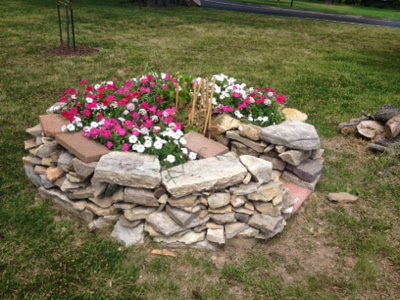
This is my favorite bed in the garden so far. It was built and filled by the Tillman kids--in the rain at Healthy Kids Night--with materials donated by Tillman families. That in itself was magical. But the other cool things are this bed's water holding capability and the compost collector in the center of the bed. The stories we had heard seem to be true: keyhole gardens rock! The flowers are so pretty, but I really want to see food growing in here next. Check out more about keyhole gardens here, they have a neat history!
Sunday, March 30, 2014
Eating for Sustainability: Last One for Awhile
I've been trying to muster up motivation to write more about our weekly meals and grocery costs, but I can't seem to and here's why. Tallying receipts has gotten to be a pain in the rear, and I have bigger fish to fry. Seriously, though, it is a pain. And because it's finally spring and because we are wrapping up this first planning/design phase for Tillman's sustainability committee, my time spent on school gardening is on the rise. And that's just way more compelling than putting my trips to the grocery under the microscope. I'm glad I tried the food experiment, and I plan to keep trying to whittle down my grocery spending while increasing my support of sustainable food systems. But I'm very grateful that I don't have to keep ultra-close tabs on my food expenditures. Maybe down the road our family will try to eat for a week on what someone in poverty might be working with. For now, though, I'm tired of talllying receipts and I want to have some fun thinking (and writing) about school gardening.
But before I go, here are a few things gleaned from the food experiment.
But before I go, here are a few things gleaned from the food experiment.
- Switching to more local and organic hasn't increased my weekly grocery bills. Minimizing waste saves as much or more money than buying organic has cost me.
- I like the combined CSA model very much. I base my grocery shopping for the week on what I receive in a CSA allotment. For me, this makes meal planning much easier (not overwhelmed with too much choice) and has made me feel more creative.
- Using dried beans is super-economical. Lots of choices too--my favorites are chickpeas and black beans.
- Popcorn. Best snack ever (at least for this food experiment). Cheap and easy. We don't have a microwave, so I learned awhile back how to make it on the stovetop. Piece of cake. Anything you can do to reduce the amount of salty bags of snack food in your grocery cart will really make a dent in your bill. Plus you can make popcorn so many different ways, sweet or salty, you don't have to get bored with it!
- I rely heavily on one piece of equipment, and I bet a lot of people haven't heard of it. It's a 3-in-1 rice cooker/crockpot/pressure cooker. We bought it when we moved two years ago into a house with downsized kitchen space. It's an investment but well worth it. I can cook white rice in 6 minutes, and brown rice in under 20 in this thing. Can pressure cook chick peas in about 15 minutes. Love, love, love it.
Thursday, February 20, 2014
Eating for Sustainability: CSAs defined + 6-week recap
For the past 6 weeks, I have been experimenting to see if our family could shift our food consumption to almost all local and/or organic without spending more on groceries than we did at the start. In the beginning, we ate a fair amount of processed food, frequently bought non-organic produce, and wasted more food than I would have thought. I guesstimated that our original weekly grocery spending averaged $200, so my goal is to keep costs at or below that level. I should note that this cost doesn't include eating out (once or twice a week) or the cost of weekday lunches for my husband and oldest kiddo. After 6 weeks, I'm happy to report that our weekly grocery average is $179. Last week was the first week that I bought organic selections for as many of the items on my grocery list as possible. We'll see if the average goes up or not in the coming weeks...
Several people have asked about the CSA we buy from: what they are and whether we like it. First of all, the simplest way to describe a CSA is a farm subscription. When the concept emerged, folks would pay a particular farmer in advance for a share of that season's harvest. Each week the customer picks up a box of produce, with contents and amounts dictated by what's ripe each week. In this way, the consumer shares the risk with the farmer, because if it's a drought-year or pests decimate a particular crop, they will see the results in diminished boxes. But if it's a bumper-crop year, customers reap the benefits of that as well, sometimes getting enough produce to share or preserve. This model benefits consumers by giving them regular access to fresh, local food, and benefits farmers by essentially helping them bypass (at least partially) asking banks for credit each season. In addition, they are assured payment each season, even in times of crop failure, which means that more small farms can stay in business each year and continue to provide food to the local community.
As the CSA model gained steam, farmers began to pool resources to offer customers more variety each week. This is the model we are currently supporting with our Fair Shares subscription, and I have to say, I really like it. We joined Fair Shares this winter, so I'm not sure what weekly allotments will be like in the growing season. Now in late winter, we receive very little that's "just harvested", but are really enjoying things that have been grown and preserved here locally (like spaghetti sauce and canned peaches). I've been amazed by the flavor of crispness of local apples that have been stored by the CSA since fall. I know I don't have room in my fridge to hold dozens of apples for months, so it's been great to get a few each week. And of course, the fact that this particular CSA includes meat, eggs, and dairy seals the deal that I love it. Here's what we got a couple weeks ago:

There are other things in the "plus" column for me, besides knowing I'm helping support small farms and eating more healthy food. Recipe planning is more fun. Instead of thumbing through a cookbook with no direction or inspiration, I have the ingredients from the weekly CSA box as a starting point for meal planning. I no longer have 30,000 ingredients that I could start with. I have 10 or 15. Much more manageable, and frankly, inspiring. My trips to the grocery store are quicker, as there are fewer items to grab each week. And--very important, I think--we waste A LOT LESS food. In part, this is due to the fact that when the connection to the farmer is shortened, I tend to consciously value their efforts more than I do when picking up something that's pre-packaged and super-easy for me to toss on the table without much thought or effort. Reduced waste could also be due to the fact that I don't want to have to report on here that my grocery bills rise due to this experiment, so I try harder than I used to!
Here's a great how-to link for reducing food waste in your household. http://www.epicurious.com/articlesguides/blogs/editor/2014/01/ways-to-reduce-food-waste-.html Hope it's helpful!
Several people have asked about the CSA we buy from: what they are and whether we like it. First of all, the simplest way to describe a CSA is a farm subscription. When the concept emerged, folks would pay a particular farmer in advance for a share of that season's harvest. Each week the customer picks up a box of produce, with contents and amounts dictated by what's ripe each week. In this way, the consumer shares the risk with the farmer, because if it's a drought-year or pests decimate a particular crop, they will see the results in diminished boxes. But if it's a bumper-crop year, customers reap the benefits of that as well, sometimes getting enough produce to share or preserve. This model benefits consumers by giving them regular access to fresh, local food, and benefits farmers by essentially helping them bypass (at least partially) asking banks for credit each season. In addition, they are assured payment each season, even in times of crop failure, which means that more small farms can stay in business each year and continue to provide food to the local community.
As the CSA model gained steam, farmers began to pool resources to offer customers more variety each week. This is the model we are currently supporting with our Fair Shares subscription, and I have to say, I really like it. We joined Fair Shares this winter, so I'm not sure what weekly allotments will be like in the growing season. Now in late winter, we receive very little that's "just harvested", but are really enjoying things that have been grown and preserved here locally (like spaghetti sauce and canned peaches). I've been amazed by the flavor of crispness of local apples that have been stored by the CSA since fall. I know I don't have room in my fridge to hold dozens of apples for months, so it's been great to get a few each week. And of course, the fact that this particular CSA includes meat, eggs, and dairy seals the deal that I love it. Here's what we got a couple weeks ago:
There are other things in the "plus" column for me, besides knowing I'm helping support small farms and eating more healthy food. Recipe planning is more fun. Instead of thumbing through a cookbook with no direction or inspiration, I have the ingredients from the weekly CSA box as a starting point for meal planning. I no longer have 30,000 ingredients that I could start with. I have 10 or 15. Much more manageable, and frankly, inspiring. My trips to the grocery store are quicker, as there are fewer items to grab each week. And--very important, I think--we waste A LOT LESS food. In part, this is due to the fact that when the connection to the farmer is shortened, I tend to consciously value their efforts more than I do when picking up something that's pre-packaged and super-easy for me to toss on the table without much thought or effort. Reduced waste could also be due to the fact that I don't want to have to report on here that my grocery bills rise due to this experiment, so I try harder than I used to!
Here's a great how-to link for reducing food waste in your household. http://www.epicurious.com/articlesguides/blogs/editor/2014/01/ways-to-reduce-food-waste-.html Hope it's helpful!
Thursday, February 6, 2014
One Month In--Eating for Sustainability Pt. 5
This week I spent $150 in groceries, same as last week. I will keep tallying, but I'm feeling more and more confident that my average weekly bill won't exceed $200, even when I've transitioned to all organic or local. However, I am still amazed by the amount of food I am able to cull from the cupboards each week. This week I dug up some old pancake mix, dried cranberries, chocolate chips, and pecans to concoct a dessert that was meant to be a bar cookie but turned into a cake. That was a fun kitchen moment with the kids, and it felt good to reduce waste. I can't help but think that developing creativity in the kitchen is as good for my morale as it is for the environment.
Which leads me to the CSA box this week. Most of it was easy for me to use: ground beef, a nut butter, salsa, bean dip, eggs, mushrooms, yogurt, apples. The one exception that forced me to get creative? Acorn squash. I still had one from a previous week, and they gave us two this week. I definitely don't love winter squash, but I couldn't put off using them any longer. One I baked and pureed. I used the puree in the cookie-turned-cake concoction. The remaining two became "Sausage and Apple Stuffed Acorn Squash" from food.com. It was a heavy meal, but still pretty good. For winter squash, I'll take that.

By the way, I just learned that Fair Shares CSA is offering two-week trial memberships. Find more info at https://fairshares.org/trial-membership. If you decide to try it, please tell them I sent you because I'll get a $5 credit just for you trying it out!
This week, I've realized that it's not that hard for me to follow Michael Pollan's advice to:
It does take planning, but it doesn't feel like a burden at all right now. Part of that is due to the easy, from scratch foods that have slowly accumulated in my mental recipe file over the years. (See below for two great recipes from friends.) And part of it is that I can cut vegetables a lot faster than I used to. But part of it is due to the fact that mindfully buying, cooking, and eating has integrated my values and my actions. Eating in a way that promotes the health of my family, the local economy, and the Earth actually lifts a weight rather than creating one. Once again, I'm thankful to have the means and the time to buy well, cook well, and eat well.
2 cans chickpeas, drained (juice of one can reserved)
3-4 T. tahini, or more to taste (tahini, or sesame seed paste, found in Middle Eastern section of grocer, or at specialty shop--it's a lot easier to find than it used to be!)
Juice of 1-2 lemons, to taste
About 1 t. of salt
2 garlic cloves, minced
A tablespoon or two of olive oil
Puree it all in a food processor or blender. Adust seasonings to taste. If too salty, add more lemon (and vice-versa). If too thick, add some liquid from chickpeas.
That's the basic recipe--so easy, so yummy, and so simple to vary. Have fun!
1/3 cup vinegar or lemon juice (Pascale got me started off using red wine vinegar)
1/2 t. salt
1 t. Dijon mustard
1 clove garlic, pressed
1/4 t. black pepper
1 c. olive oil
Whisk it all together. It will keep in the refrigerator for week. When cold, the oil tends to partially solidify, so let it sit at room temp for awhile before serving. Variations: Add fresh or dried herbs. Whisk in 1 to 2 T. of minced fresh herbs, or 1/2 to 1 t. dried. Allow dried herbs to steep in vinaigrette for at least half an hour.
Which leads me to the CSA box this week. Most of it was easy for me to use: ground beef, a nut butter, salsa, bean dip, eggs, mushrooms, yogurt, apples. The one exception that forced me to get creative? Acorn squash. I still had one from a previous week, and they gave us two this week. I definitely don't love winter squash, but I couldn't put off using them any longer. One I baked and pureed. I used the puree in the cookie-turned-cake concoction. The remaining two became "Sausage and Apple Stuffed Acorn Squash" from food.com. It was a heavy meal, but still pretty good. For winter squash, I'll take that.
By the way, I just learned that Fair Shares CSA is offering two-week trial memberships. Find more info at https://fairshares.org/trial-membership. If you decide to try it, please tell them I sent you because I'll get a $5 credit just for you trying it out!
This week, I've realized that it's not that hard for me to follow Michael Pollan's advice to:
- Eat only food that Grandma would recognize as food.
- Shop the perimeter of the grocery store, because that's where the least processed food is found.
- Don't eat food that won't ever rot, and try and keep the number of ingredients in a product at or below five.
- Eat mostly plants. When you do eat meat, eat meat that's been raised in humane conditions and given good feed.
It does take planning, but it doesn't feel like a burden at all right now. Part of that is due to the easy, from scratch foods that have slowly accumulated in my mental recipe file over the years. (See below for two great recipes from friends.) And part of it is that I can cut vegetables a lot faster than I used to. But part of it is due to the fact that mindfully buying, cooking, and eating has integrated my values and my actions. Eating in a way that promotes the health of my family, the local economy, and the Earth actually lifts a weight rather than creating one. Once again, I'm thankful to have the means and the time to buy well, cook well, and eat well.
Recipes
Hummus
This recipe is from my college roommate, Salwa Rosen. The first time I ate her mama's version of hummus and taboulleh, I thought I'd died and gone to heaven. Mama Rosen's taboulleh was great, but the hummus took so much less time that it was one of the first things I ever consistently made from scratch. Now that I've started cooking my own beans, maybe I will shift from canned chickpeas to dried...2 cans chickpeas, drained (juice of one can reserved)
3-4 T. tahini, or more to taste (tahini, or sesame seed paste, found in Middle Eastern section of grocer, or at specialty shop--it's a lot easier to find than it used to be!)
Juice of 1-2 lemons, to taste
About 1 t. of salt
2 garlic cloves, minced
A tablespoon or two of olive oil
Puree it all in a food processor or blender. Adust seasonings to taste. If too salty, add more lemon (and vice-versa). If too thick, add some liquid from chickpeas.
That's the basic recipe--so easy, so yummy, and so simple to vary. Have fun!
Versatile Vinaigrette (from Moosewood Restaurant's Simple Suppers)
Although this recipe is from a cookbook, I really want to credit my friend Pascale Perraudin (her recipe is very similar to the one below) for teaching me how to make my first vinaigrette. Knowing how to do that literally changed my life. It was so delicious and easy that I hardly ever buy salad dressing anymore (have you looked at those labels?!?!).1/3 cup vinegar or lemon juice (Pascale got me started off using red wine vinegar)
1/2 t. salt
1 t. Dijon mustard
1 clove garlic, pressed
1/4 t. black pepper
1 c. olive oil
Whisk it all together. It will keep in the refrigerator for week. When cold, the oil tends to partially solidify, so let it sit at room temp for awhile before serving. Variations: Add fresh or dried herbs. Whisk in 1 to 2 T. of minced fresh herbs, or 1/2 to 1 t. dried. Allow dried herbs to steep in vinaigrette for at least half an hour.
Friday, January 31, 2014
Eating for Sustainability: An Experiment Pt. 4
Meals kept truckin' along this week, and I think I'm about out of the woods when it comes to heavily processed foods in my pantry. Super Bowl Sunday should take care of that once and for all, don't you think? As for my grocery bill this week....$150! Yes! And that even included a store-bought carrot cake for Kyle's birthday dinner, because, frankly, presentation just isn't my thing. All in all, I feel good about the food we ate this week.
Our CSA share contained lots of interesting items but the funny thing is, eggs and sprouts were the only totally unprocessed items.
 |
| Bread, cheese, eggs |
 |
| Pesto (local ingredients from summer, frozen), Whole wheat gnocchi (frozen) |
 | ||||
| Old fashioned bologna, sunflower sprouts, minestrone soup (frozen) |
I was really excited to see a frozen soup choice from Saint Louis
University (SLU), but the family reported it was bland (it had seemed
like the perfect thing to serve on a cold night when I had to leave for a
meeting). I will try it myself before passing judgment. I really
hope it can be spruced up, because one of the major issues for viable
small-scale food systems is processing. The other biggie that I see is
packaging. We need processing and packaging operations that accept
product from small farms and distribute to local retailers. So, even if nutrition trumped flavor in this
instance of locally grown and processed, I'm still glad that SLU has
emerged as a leader to fill some gaps in St. Louis's emerging local
food system.
Most of my favorite dishes this week were meatless (as usual), but the carnitas made from a pork roast were divine so I'll include that recipe at the bottom. Another that I've included is Chick Pea Stew--really nice, and very inexpensive. Scroll down for recipes of dishes that turned out much better than this, this...dear God, what is that? Seriously, when I look at the picture below I feel sick (or like laughing hysterically), and I wonder why in the world my family ever requests that I cook more meat. I'm so sorry, cow--I wish I could've done you justice!
Most of my favorite dishes this week were meatless (as usual), but the carnitas made from a pork roast were divine so I'll include that recipe at the bottom. Another that I've included is Chick Pea Stew--really nice, and very inexpensive. Scroll down for recipes of dishes that turned out much better than this, this...dear God, what is that? Seriously, when I look at the picture below I feel sick (or like laughing hysterically), and I wonder why in the world my family ever requests that I cook more meat. I'm so sorry, cow--I wish I could've done you justice!
 |
Stuffed shells were much nicer, I must say--in both looks and flavor!

The sides that went with the carnitas were also lovely and delicious. I was very excited to learn that ricotta can be used with Mexican-inspired dishes and not just Italian. We like to mix it up a lot.

And finally, simple salads and roasted root vegetables (this week, just two kind of taters) have become staples around here. They're just so fast to put together, I like to have the greens, and the kids like the roasted veggies. No mutinies on these yet, so that's a good sign!

So, I'm wondering from those of you who have read this far (thanks!) and already minimize unprocessed food in your diet, what have you used to replace processed snack food like chips or energy bars? Do you have any gems that aren't too time-consuming to make, affordable, and/or purchased but you feel good about? We have been eating a lot of popcorn cooked on the stove, but I'm sure that will get old one of these days.
Thanks for reading, everyone, and I hope your week ahead is full of fun food adventures!
Chickpea and Spinach Stew (from Vegetarian Cooking for Everyone by Deborah Madison)
2 T. extra virgin olive oil1 small onion, finely chopped
3 garlic cloves, minced
2 pinches red pepper flakes
1 t. paprika
1 t. fresh or dried minced rosemary
1/4 c. chopped parsley
1 c. peeped, diced tomatoes, fresh or canned
3 c. cooked chickpeas or 2 15-0z cans, rinsed
salt and pepper
2 bunches spinach, stems removed
garlic mayonnaise (the cookbook calls for making the mayo from scratch but I just mixed about 1/3 cup low-fat mayo with 2 big cloves of garlic that I put through the ringer with my mortar and pestle)
In a wide saute pan, heat the oil over high heat. Add the onion, garlic, red pepper flakes, paprika, rosemary, and half the parsley Saute for 2 minutes, then lower the heat to medium and cook, stirring frequently, until the onion is soft, about 12 minutes. Add the tomatoes and chickpeas, season with salt and pepper, then over and simmer for 15 minutes. Add the spinach to the chickpeas, taste for salt, and season with pepper. Plate it up, add a spoonful of mayonnaise to each dish (this is key, kicks the flavor WAY up, and garnish with remaining parsley (also key, helping tone down the garlic breath!).
Oven-Fried Pork Carnitas with Guacamole and Orange Salsa (from Food & Wine An Entire Year of Recipes 2006)
I made this dish by the recipe, which used a lot of oil to cook the meat. It was good, but next time I will totally throw the pork roast in the slow cooker after marinating. Less fat, and less oil to figure out what to do with when it's all said and done.1/2 c. tamarind concentrate
2 T. honey
2 T. sherry vinegar (I used white whine vinegar)
2 1/2 c. vegetable oil, plus more for brushing
2 1/2 pounds pork shoulder, cut into 1 1/2-inch pieces
salt and pepper
1 medium white onion, finely chopped
2 garlic cloves, unpeeled
1 Hass avocado, pitted and peeled
3 T. fresh lime juice
2 navel oranges
1 small red onion, thinly sliced
1/4 c coarsely chopped cilantro
1/2 habanero chile, seeded and finely chopped (I just used a little jalapeno, that's what I had)
1 c. ricotta cheese
1 small plum tomato, chopped (I used up a little canned tomato I had in the fridge, drained)
1 jalapeno or serrano chile, seeded and finely chopped
12 flour tortillas
1. In a large bowl, mix the tamarind concentrate with the honey, sherry vinegar and 1/4 c. of the vegetable oil. Add the pork shoulder, season with salt and pepper and stir to coat. Let the pork marinate at room temp for 1 hour. Drain the pork and pat dry.
2. Preheat the oven to 375. In a cast-iron skillet, heat 2 T. of the oil. Add half of the pork and cook over moderately high heat, turning occasionally, until the meat is brown all over, about 6 minutes. Transfer to baking dish and repeat with 2 more T. of oil and remaining meat. Add two-thirds o chopped white onion and 2 c oil to the baking dish. Cover with foil and bake for about 2 hours, or until the meat is very tender.
3. Meanwhile, wrap the garlic cloves in foil and bake for 1 hour, or until softened. (This seemed unnecessary--garlic flavor mellowed so much not sure how much it added to the guacamole. Next time, I'll just make my regular old guacamole which just mixes a little minced onion, some lime juice, S&P, and the avocado.) Let cool slightly, then peel the cloves. In a small bowl, mash the avocado with the garlic. Stir in 1 T. of the lime juice and season with salt and pepper.
4. Using a sharp knife, peel the oranges, removing all the bitter white pith. Working over a bowl, cut in segments. Squeeze the orange membranes to extract the juice. (For this step, I just peeled a few "Cuties", and chopped them up. Much easier than what this step sounded like.) Stir in the red onion, cilantro, and habanero chile and the 2 remaining tablespoons of lime juice. (Again, I changed it up. Didn't use habanero--I want the kids to at least try things!)
5. In a medium bowl, combine the ricotta cheese with the tomato, jalapeno and the remaining one-third of the chopped white onion. Season with salt and pepper.
6. Brush the tortillas lightly with oil, then stack and wrap them in foil. Heat the tortillas in the oven until warm. Drain the pork on paper towels. Pork, ricotta stuff, and guac in the tortillas. Orange salsa on the side. Delish!
Sunday, January 26, 2014
Collecting Kids' Ideas at Tillman
So, I'm hoping this post will give you a snapshot of why I think what the Sustainability Committee at Tillman Elementary is doing is so exciting. I always say that I am a school gardener, but what I'm a part of is really more holistic than that. My crew and I care about the health of both people and the planet, we try to include as many perspectives as possible, and we are operating in a school where character education and service learning are huge parts of the school culture. The committee formed less than a year ago, and I feel like we've accomplished a lot already. A lot of that has been planning, and collecting long-term sustainability ideas from parents, teachers, and students. On a recent blustery and cold day in the polar vortex, the sustainability committee hosted a design charrette, in which the opinions collected were the kids'.
How cool! First, that the school administration (thanks, Lisa Greenstein and Maria Stobbe!) was so supportive. They stand firmly behind the idea of teaching the school community about sustainability, and they were ready to let kids venture outdoors in really cold, snowy weather! For those of you that haven't been in the public schools in awhile, this may not seem avant garde at all. However, times have really changed, and kids and schools aren't prepared for outdoor recess in all but the best of weather anymore. Kids often don't have hats, gloves, boots, etc. for cold weather and "blacktop only" days are frequent during the muddy days of spring and fall. So, for even some of the classes to go outside when temps were in the teens was amazing. And those who didn't venture out? The technology support staff created a "virtual tour" of the campus so there was flexibility in how to participate!
Second, first-hand recommendations from a group of kids is always so exciting. Any time that groups work to include many voices in decision-making, it's great. But when kids are asked, their collective insight can be particularly inspiring. This is what I felt when I read my friend, Margaret Sadicarrio's report from her point of view in the charrette. She talked to most of the 550 kids at Tillman as they came through the cafeteria during the charrette, and listened to their ideas about changes to make in the cafeteria that relate to the idea of sustainability. (We had folks positioned all around the school listening for ideas, and we asked teachers to record observations as they facilitated class sustainability discussions as well.) Below is what Margaret heard, in her words. It's just one volunteer out of many who listened to kids that day, but it is so inspiring and so reminiscent of what I've heard from kids throughout the last few years that I just had to share. I'll post a link to the full results when we compile everything, but for now I hope this gives you a taste of why me and so many others are hooked on outdoor education, school gardens, and changing food systems for the better for kids! And why working with a school that is behind kids' innovation and leadership can fill one with so much hope. I can't wait to tell you more as the "planning phase" ends, and the "doing phase" begins...
Reporting Notes from Design Charrette, from Margaret Hill Sadicario, Tillman Sustainability Committee Volunteer:
How cool! First, that the school administration (thanks, Lisa Greenstein and Maria Stobbe!) was so supportive. They stand firmly behind the idea of teaching the school community about sustainability, and they were ready to let kids venture outdoors in really cold, snowy weather! For those of you that haven't been in the public schools in awhile, this may not seem avant garde at all. However, times have really changed, and kids and schools aren't prepared for outdoor recess in all but the best of weather anymore. Kids often don't have hats, gloves, boots, etc. for cold weather and "blacktop only" days are frequent during the muddy days of spring and fall. So, for even some of the classes to go outside when temps were in the teens was amazing. And those who didn't venture out? The technology support staff created a "virtual tour" of the campus so there was flexibility in how to participate!
Second, first-hand recommendations from a group of kids is always so exciting. Any time that groups work to include many voices in decision-making, it's great. But when kids are asked, their collective insight can be particularly inspiring. This is what I felt when I read my friend, Margaret Sadicarrio's report from her point of view in the charrette. She talked to most of the 550 kids at Tillman as they came through the cafeteria during the charrette, and listened to their ideas about changes to make in the cafeteria that relate to the idea of sustainability. (We had folks positioned all around the school listening for ideas, and we asked teachers to record observations as they facilitated class sustainability discussions as well.) Below is what Margaret heard, in her words. It's just one volunteer out of many who listened to kids that day, but it is so inspiring and so reminiscent of what I've heard from kids throughout the last few years that I just had to share. I'll post a link to the full results when we compile everything, but for now I hope this gives you a taste of why me and so many others are hooked on outdoor education, school gardens, and changing food systems for the better for kids! And why working with a school that is behind kids' innovation and leadership can fill one with so much hope. I can't wait to tell you more as the "planning phase" ends, and the "doing phase" begins...
Reporting Notes from Design Charrette, from Margaret Hill Sadicario, Tillman Sustainability Committee Volunteer:
First,
water was really a big issue. They want at least a water fountain in
the cafeteria...how about a berkey water filtration set up?
http://www.amazon.com/Berkey-BK4X2-BB-Filtration-Filters-Fluoride/dp/B00BWIX1EQ
They were also interested in just more things to drink: mint tea, any tea, OJ, hot chocolate, organic milk.
Electric Juicer? (bicycle powered juicer?
http://www.farmtoschool.org/CO/media.htm
Smoothies were also requested, along with MORE fresh
fruit, strawberries in particular, which could be be a big project in the garden.
They want round tables. Assigned seating.
Music. (Some classes even suggested live music some
times on the stage.)
Colorful
painted walls. (They said that the cafeteria has no "life." Someone
even said a red carpet would liven up the room.) They want plants in
the room.
Flowers on the tables. (from the prairie??)
Food:
They wanted soup: Cheddar brocoli, chili, chicken noodle (but good
quality, they said that the quality of the food in the kitchen was
"fake" and "bad".
They
wanted stir fry, and real mashed potatoes (not the ones from a box,
they can tell the difference.) Homemade pizzas and quesadillas.
Bigger salad bar with (again) more fruit. They were open to eating more salads.
They really want to eat outside during nice days...this should also be a priority.
They want the windows to open or at least be uncovered to let the light in.
They all said that they would like to cook in the kitchen and help prepare food.
They
want organic and a gluten free option and some said a vegetarian option
(time are changing and the cafeteria needs to adapt.)
A switch from white bread to whole wheat - this can be done now.
There
was a desire to get rid of the disposable plates and use ones that can
be washed and cups that could be washed. (we would then need to get a
dishwasher. Lori in the kitchen said that there would be room.)
No packaged fruit, but fruit that was fresh.
Posted expectations in the cafeteria.
Compost that STAYS on campus or comes back at the end of the year.
Recommendations:
The cooking staff needs more education about cooking healthy fruits and vegetables from scratch.
Juicer
Berkey (with real cups for anyone who wants to drink from it.)
Dishwasher
Dishes and cups
Paint and decorations
Coat rack
Overall, the room needs more love, color and life.
Margaret Hill Sadicario
Subscribe to:
Posts (Atom)