Denver Urban Gardens, or DUG, compiled some research findings about the benefits of school gardens. This is a great resource for those of us who are school garden advocates. The studies cited were all published between 2002 and 2012, so there is some fairly current stuff in there. If you're not already convinced that school gardens should be widely used in every school, check out the link below.
If you are already an advocate, this paper looks like a great resource to print and share with folks who aren't so sure about the idea of gardening with students. It's short, with bullet points sharing the benefits in the areas of academic achievement, social and emotional health, physical health, and benefits to the school and community at large. For those wanting to know more, it includes a list of the sources cited in the paper. Check it out!
"Benefits of School Gardens" compiled by Denver Urban Gardens
Wednesday, September 10, 2014

Friday, September 5, 2014
Race and Our Community
So, I live about 20 minutes from Ferguson in a pretty darn white suburb of St. Louis. Since Michael Brown was killed, I can't stop thinking about that whole situation--but even more so just how entrenched this city is in de facto segregation and systemic racism. I've been reluctant to write about it on here, in part because my feelings of sadness and confusion about how to make a difference have impeded any ability I might have to write something cohesive. But also, if I'm honest, because I am nervous about ruffling feathers. I am definitely non-confrontational.
The title of this blog is "Kids, Community, and Food", and I usually write about food or kids growing food. But community is in the title too, and it's it's in there because I believe so strongly in the power of gardening in groups to build healthy communities. And because I believe that we have to have strong, healthy community groups in order to solve the complex social and environmental problems that our children are inheriting. Mike Brown's death highlights just how unhealthy our community here in St. Louis is, and the outrage and sadness that bubbled over in Ferguson has been there a long time because our community is chronically ill with systemic racism.
I still don't know what to say, exactly. But I do know that I don't want things to just calm down and go back the way they were. I want things to change. To be better. I want to live in a city without a redline. I want to live in a city, where when I choose which neighborhood to live in based on the quality of the school district, that school will also be racially diverse. That is not the city I live in today. And I did choose a well-to-do, mostly white school district when we moved back to St. Louis a couple years ago. It's been a long time since I lived in a diverse suburb of St. Louis, studied environmental justice in grad school, and experienced the power of community and school gardening to bridge racial divides.
Today I find myself gardening in groups of mostly white people through my work to integrate sustainability education into the curriculum at Tillman Elementary. Of course, it's great, because community gardening is almost always awesome. While I'm confident we are laying down experiences that will help the kids involved learn to care for the Earth, I don't believe that this will have any impact on dismantling racism unless we make social justice an explicit part of what we teach. There are lots of avenues for this, especially through the lens of environmental justice. I am certain that issues of fair food distribution will come up, because the kids at Tillman are so wonderfully kind-hearted. But will we adults have the courage to take it a step further and examine who is most likely to be "food insecure" in our city? I don't know. I'm hopeful, actually, because my son told us last night that his class wrote cards for kids at Michael Brown's school. That's a step, and one I could learn from.
After several years of living in mostly white neighborhoods, I have noticed a subtle shift toward complacency in my own self. It's just easy not to think about systemic racism, or even my own personal biases, when I live in a neighborhood surrounded by a lot of other folks enjoying white privilege without even having to think about it. I'm not saying we're bad people, I'm just saying we are enjoying the privilege of staying blind to systemic racism if we want to. I don't know how to fix it, I just think we definitely can't fix it if we are afraid to look at it and talk about it. And if we are on the defensive when we do look and talk.
A couple weeks ago, my pastor quoted Cornell West (prominent black thinker/philosopher) addressing a white audience. West had said something like, "If I still have vestiges of white supremacy in me, I'm willing to bet that you do too." For me, this was so comforting. And challenging. Racism is embedded in our culture and communities, so of course it's hiding in us too. It just is. And if we are honest with ourselves and work to change things for the better, then we need not be ashamed. Another thing my pastor said that stuck with me: "Our faith tells us that we are one. If this is true, then we have to see Michael Brown as our child. And we have to see Darren Wilson as our brother." Whoa. Think about that one for a bit.
Well, I already wrote way more than I had planned. I got on here just planning to share three articles that have touched me deeply, or opened my eyes in new ways since everything blew up in Ferguson. Maybe these will have meaning for you too. There are links to them below. Thanks for reading, and thinking, and talking with your friends about how to make our world better for everyone.
Article by Wash U mom (African-American) about her sons
Article by a white mom about her sons
Blog post from a woman in Portland, Or entitled "I am racist, and so are you"
The title of this blog is "Kids, Community, and Food", and I usually write about food or kids growing food. But community is in the title too, and it's it's in there because I believe so strongly in the power of gardening in groups to build healthy communities. And because I believe that we have to have strong, healthy community groups in order to solve the complex social and environmental problems that our children are inheriting. Mike Brown's death highlights just how unhealthy our community here in St. Louis is, and the outrage and sadness that bubbled over in Ferguson has been there a long time because our community is chronically ill with systemic racism.
I still don't know what to say, exactly. But I do know that I don't want things to just calm down and go back the way they were. I want things to change. To be better. I want to live in a city without a redline. I want to live in a city, where when I choose which neighborhood to live in based on the quality of the school district, that school will also be racially diverse. That is not the city I live in today. And I did choose a well-to-do, mostly white school district when we moved back to St. Louis a couple years ago. It's been a long time since I lived in a diverse suburb of St. Louis, studied environmental justice in grad school, and experienced the power of community and school gardening to bridge racial divides.
Today I find myself gardening in groups of mostly white people through my work to integrate sustainability education into the curriculum at Tillman Elementary. Of course, it's great, because community gardening is almost always awesome. While I'm confident we are laying down experiences that will help the kids involved learn to care for the Earth, I don't believe that this will have any impact on dismantling racism unless we make social justice an explicit part of what we teach. There are lots of avenues for this, especially through the lens of environmental justice. I am certain that issues of fair food distribution will come up, because the kids at Tillman are so wonderfully kind-hearted. But will we adults have the courage to take it a step further and examine who is most likely to be "food insecure" in our city? I don't know. I'm hopeful, actually, because my son told us last night that his class wrote cards for kids at Michael Brown's school. That's a step, and one I could learn from.
After several years of living in mostly white neighborhoods, I have noticed a subtle shift toward complacency in my own self. It's just easy not to think about systemic racism, or even my own personal biases, when I live in a neighborhood surrounded by a lot of other folks enjoying white privilege without even having to think about it. I'm not saying we're bad people, I'm just saying we are enjoying the privilege of staying blind to systemic racism if we want to. I don't know how to fix it, I just think we definitely can't fix it if we are afraid to look at it and talk about it. And if we are on the defensive when we do look and talk.
A couple weeks ago, my pastor quoted Cornell West (prominent black thinker/philosopher) addressing a white audience. West had said something like, "If I still have vestiges of white supremacy in me, I'm willing to bet that you do too." For me, this was so comforting. And challenging. Racism is embedded in our culture and communities, so of course it's hiding in us too. It just is. And if we are honest with ourselves and work to change things for the better, then we need not be ashamed. Another thing my pastor said that stuck with me: "Our faith tells us that we are one. If this is true, then we have to see Michael Brown as our child. And we have to see Darren Wilson as our brother." Whoa. Think about that one for a bit.
Well, I already wrote way more than I had planned. I got on here just planning to share three articles that have touched me deeply, or opened my eyes in new ways since everything blew up in Ferguson. Maybe these will have meaning for you too. There are links to them below. Thanks for reading, and thinking, and talking with your friends about how to make our world better for everyone.
Article by Wash U mom (African-American) about her sons
Article by a white mom about her sons
Blog post from a woman in Portland, Or entitled "I am racist, and so are you"
Friday, August 22, 2014
Too Many Zukes?
If you're a gardener or a CSA subscriber, chances are high that you are inundated with zucchini right about now. This summer I've grilled it, hidden it in spaghetti sauce, made zucchini brownies, and frozen gobs of it for use this winter. After all that, I still can't seem to clear my crisper drawers of the stuff!
On the verge of anonymously dumping some on my neighbors' porches, I found a better option: Zucchini Pie. A cheesy, eggy, zukey recipe that calls for 8 cups of zucchini. Yes, 8 cups!!! Besides ridding myself of zucchinis for a couple days, this recipe tastes good too. It made two pies, so I did offload one on a neighbor. That seems so much better for neighbor relations than what I was about to do.

The recipe is from a cookbook called Simply in Season, "commissioned by Mennonite Central Committee to promote the understanding of how the food choices we make affect our lives and the lives of those who produce the food." Published by Herald Press, this cookbook is a great study in how to eat seasonally and reduce food waste. Thank you to my dear friend Rachel Maxwell-Wells for giving me this cookbook! You can find out how to order this book here http://www.heraldpress.com/titles/simplyinseason/.
But here's the recipe for those of you who might want to try before you buy. Enjoy!
Italian Zucchini Pie
Preheat oven to 375.
1/4 c. warm water
1 T. active dry yeast
Mix until yeast dissolves. Set aside.
1/4 c. milk
1 T. olive oil
1 egg, beaten
Combine in a mixing bowl or food processor. Add dissolved yeast and stir.
1/4 c. whole wheat flour
1/4 c. parmesan cheese, grated
1 t. salt
1-2 t. fresh basil, chopped
Blend in.
2 c. bread flour (I added 2 T. vital wheat gluten to regular flour, worth a try with regular flour if you don't have the substitutions.)
Add 1/2 c. at a time to make a smooth but slighly sticky dough. Place in a greased bowl, trne to grease both sides, cover with a damp cloth, and place in a warm place while preparing the zucchini filling.
1/4 c. butter
8 c. zucchini, thinly sliced
1-2 c. chopped onion
Melt butter in a large frypan over medium heat. Add zucchini and onions and saute until soft, about 10 minutes. Remove from heat.
1 clove garlic, minced
1 T. each fresh basil and oregano (chopped; or 1 t. dried)
1 t. each fresh thyme, rosemary, sage, parsley, savory, and marjoram (chopped; or 1/2 t. dried) (Just use what you have, don't worry if you don't have all of these!)
1 t. salt
1/2 t. pepper
Stir in.
5 large eggs, beaten
4 c. shredded mozzarella
Combine in a separate bowl, then stir in zucchini mixture
Divide dough in half. Place each half on lightly floured surface and roll into a circle 12 inches in diameter. Place each into a lightly greased 10 inch pie dish.
4 t. mustard
1/4 c. parmesan, grated
Spread the pie crusts with mustard. Divide the zuke mixture between the two crusts. Sprinle parmesan cheese on top. Bake 18-20 minutes, until center is set. Let stand 10 minutes before serving.
On the verge of anonymously dumping some on my neighbors' porches, I found a better option: Zucchini Pie. A cheesy, eggy, zukey recipe that calls for 8 cups of zucchini. Yes, 8 cups!!! Besides ridding myself of zucchinis for a couple days, this recipe tastes good too. It made two pies, so I did offload one on a neighbor. That seems so much better for neighbor relations than what I was about to do.
The recipe is from a cookbook called Simply in Season, "commissioned by Mennonite Central Committee to promote the understanding of how the food choices we make affect our lives and the lives of those who produce the food." Published by Herald Press, this cookbook is a great study in how to eat seasonally and reduce food waste. Thank you to my dear friend Rachel Maxwell-Wells for giving me this cookbook! You can find out how to order this book here http://www.heraldpress.com/titles/simplyinseason/.
But here's the recipe for those of you who might want to try before you buy. Enjoy!
Italian Zucchini Pie
Preheat oven to 375.
1/4 c. warm water
1 T. active dry yeast
Mix until yeast dissolves. Set aside.
1/4 c. milk
1 T. olive oil
1 egg, beaten
Combine in a mixing bowl or food processor. Add dissolved yeast and stir.
1/4 c. whole wheat flour
1/4 c. parmesan cheese, grated
1 t. salt
1-2 t. fresh basil, chopped
Blend in.
2 c. bread flour (I added 2 T. vital wheat gluten to regular flour, worth a try with regular flour if you don't have the substitutions.)
Add 1/2 c. at a time to make a smooth but slighly sticky dough. Place in a greased bowl, trne to grease both sides, cover with a damp cloth, and place in a warm place while preparing the zucchini filling.
1/4 c. butter
8 c. zucchini, thinly sliced
1-2 c. chopped onion
Melt butter in a large frypan over medium heat. Add zucchini and onions and saute until soft, about 10 minutes. Remove from heat.
1 clove garlic, minced
1 T. each fresh basil and oregano (chopped; or 1 t. dried)
1 t. each fresh thyme, rosemary, sage, parsley, savory, and marjoram (chopped; or 1/2 t. dried) (Just use what you have, don't worry if you don't have all of these!)
1 t. salt
1/2 t. pepper
Stir in.
5 large eggs, beaten
4 c. shredded mozzarella
Combine in a separate bowl, then stir in zucchini mixture
Divide dough in half. Place each half on lightly floured surface and roll into a circle 12 inches in diameter. Place each into a lightly greased 10 inch pie dish.
4 t. mustard
1/4 c. parmesan, grated
Spread the pie crusts with mustard. Divide the zuke mixture between the two crusts. Sprinle parmesan cheese on top. Bake 18-20 minutes, until center is set. Let stand 10 minutes before serving.


Tuesday, July 15, 2014
The Garden Has Gone to the Dogs!


(Except the chard and the kale--is there anything these vegetables can't do?!)

I expected this impact from putting a bunch of raised beds on top of asphalt. This will be a great problem for the kids to solve next school year. Several years ago I learned about urban gardening in Cleveland, using a foot or two of mulch piled atop pavement, with raised beds on top of that. Easy solution. But rather than decide that for the kids, why not let them see for themselves that the plants struggle in extreme heat? It's a perfect project-based learning opportunity! As it stands now, I am just very thankful to all the volunteers who are helping keep things alive in this tough part of the summer. People have been showing up nearly every day to give the thirsty plants a drink. Now if I could just get to work on the thank you's....
Next to our heat island garden, we have the keyhole bed.
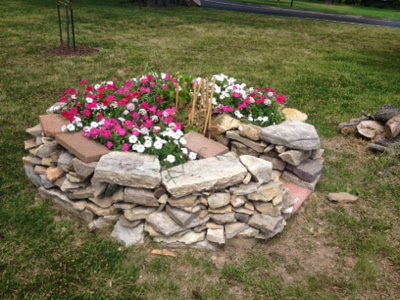
This is my favorite bed in the garden so far. It was built and filled by the Tillman kids--in the rain at Healthy Kids Night--with materials donated by Tillman families. That in itself was magical. But the other cool things are this bed's water holding capability and the compost collector in the center of the bed. The stories we had heard seem to be true: keyhole gardens rock! The flowers are so pretty, but I really want to see food growing in here next. Check out more about keyhole gardens here, they have a neat history!
Sunday, March 30, 2014
Eating for Sustainability: Last One for Awhile
I've been trying to muster up motivation to write more about our weekly meals and grocery costs, but I can't seem to and here's why. Tallying receipts has gotten to be a pain in the rear, and I have bigger fish to fry. Seriously, though, it is a pain. And because it's finally spring and because we are wrapping up this first planning/design phase for Tillman's sustainability committee, my time spent on school gardening is on the rise. And that's just way more compelling than putting my trips to the grocery under the microscope. I'm glad I tried the food experiment, and I plan to keep trying to whittle down my grocery spending while increasing my support of sustainable food systems. But I'm very grateful that I don't have to keep ultra-close tabs on my food expenditures. Maybe down the road our family will try to eat for a week on what someone in poverty might be working with. For now, though, I'm tired of talllying receipts and I want to have some fun thinking (and writing) about school gardening.
But before I go, here are a few things gleaned from the food experiment.
But before I go, here are a few things gleaned from the food experiment.
- Switching to more local and organic hasn't increased my weekly grocery bills. Minimizing waste saves as much or more money than buying organic has cost me.
- I like the combined CSA model very much. I base my grocery shopping for the week on what I receive in a CSA allotment. For me, this makes meal planning much easier (not overwhelmed with too much choice) and has made me feel more creative.
- Using dried beans is super-economical. Lots of choices too--my favorites are chickpeas and black beans.
- Popcorn. Best snack ever (at least for this food experiment). Cheap and easy. We don't have a microwave, so I learned awhile back how to make it on the stovetop. Piece of cake. Anything you can do to reduce the amount of salty bags of snack food in your grocery cart will really make a dent in your bill. Plus you can make popcorn so many different ways, sweet or salty, you don't have to get bored with it!
- I rely heavily on one piece of equipment, and I bet a lot of people haven't heard of it. It's a 3-in-1 rice cooker/crockpot/pressure cooker. We bought it when we moved two years ago into a house with downsized kitchen space. It's an investment but well worth it. I can cook white rice in 6 minutes, and brown rice in under 20 in this thing. Can pressure cook chick peas in about 15 minutes. Love, love, love it.
Thursday, February 20, 2014
Eating for Sustainability: CSAs defined + 6-week recap
For the past 6 weeks, I have been experimenting to see if our family could shift our food consumption to almost all local and/or organic without spending more on groceries than we did at the start. In the beginning, we ate a fair amount of processed food, frequently bought non-organic produce, and wasted more food than I would have thought. I guesstimated that our original weekly grocery spending averaged $200, so my goal is to keep costs at or below that level. I should note that this cost doesn't include eating out (once or twice a week) or the cost of weekday lunches for my husband and oldest kiddo. After 6 weeks, I'm happy to report that our weekly grocery average is $179. Last week was the first week that I bought organic selections for as many of the items on my grocery list as possible. We'll see if the average goes up or not in the coming weeks...
Several people have asked about the CSA we buy from: what they are and whether we like it. First of all, the simplest way to describe a CSA is a farm subscription. When the concept emerged, folks would pay a particular farmer in advance for a share of that season's harvest. Each week the customer picks up a box of produce, with contents and amounts dictated by what's ripe each week. In this way, the consumer shares the risk with the farmer, because if it's a drought-year or pests decimate a particular crop, they will see the results in diminished boxes. But if it's a bumper-crop year, customers reap the benefits of that as well, sometimes getting enough produce to share or preserve. This model benefits consumers by giving them regular access to fresh, local food, and benefits farmers by essentially helping them bypass (at least partially) asking banks for credit each season. In addition, they are assured payment each season, even in times of crop failure, which means that more small farms can stay in business each year and continue to provide food to the local community.
As the CSA model gained steam, farmers began to pool resources to offer customers more variety each week. This is the model we are currently supporting with our Fair Shares subscription, and I have to say, I really like it. We joined Fair Shares this winter, so I'm not sure what weekly allotments will be like in the growing season. Now in late winter, we receive very little that's "just harvested", but are really enjoying things that have been grown and preserved here locally (like spaghetti sauce and canned peaches). I've been amazed by the flavor of crispness of local apples that have been stored by the CSA since fall. I know I don't have room in my fridge to hold dozens of apples for months, so it's been great to get a few each week. And of course, the fact that this particular CSA includes meat, eggs, and dairy seals the deal that I love it. Here's what we got a couple weeks ago:

There are other things in the "plus" column for me, besides knowing I'm helping support small farms and eating more healthy food. Recipe planning is more fun. Instead of thumbing through a cookbook with no direction or inspiration, I have the ingredients from the weekly CSA box as a starting point for meal planning. I no longer have 30,000 ingredients that I could start with. I have 10 or 15. Much more manageable, and frankly, inspiring. My trips to the grocery store are quicker, as there are fewer items to grab each week. And--very important, I think--we waste A LOT LESS food. In part, this is due to the fact that when the connection to the farmer is shortened, I tend to consciously value their efforts more than I do when picking up something that's pre-packaged and super-easy for me to toss on the table without much thought or effort. Reduced waste could also be due to the fact that I don't want to have to report on here that my grocery bills rise due to this experiment, so I try harder than I used to!
Here's a great how-to link for reducing food waste in your household. http://www.epicurious.com/articlesguides/blogs/editor/2014/01/ways-to-reduce-food-waste-.html Hope it's helpful!
Several people have asked about the CSA we buy from: what they are and whether we like it. First of all, the simplest way to describe a CSA is a farm subscription. When the concept emerged, folks would pay a particular farmer in advance for a share of that season's harvest. Each week the customer picks up a box of produce, with contents and amounts dictated by what's ripe each week. In this way, the consumer shares the risk with the farmer, because if it's a drought-year or pests decimate a particular crop, they will see the results in diminished boxes. But if it's a bumper-crop year, customers reap the benefits of that as well, sometimes getting enough produce to share or preserve. This model benefits consumers by giving them regular access to fresh, local food, and benefits farmers by essentially helping them bypass (at least partially) asking banks for credit each season. In addition, they are assured payment each season, even in times of crop failure, which means that more small farms can stay in business each year and continue to provide food to the local community.
As the CSA model gained steam, farmers began to pool resources to offer customers more variety each week. This is the model we are currently supporting with our Fair Shares subscription, and I have to say, I really like it. We joined Fair Shares this winter, so I'm not sure what weekly allotments will be like in the growing season. Now in late winter, we receive very little that's "just harvested", but are really enjoying things that have been grown and preserved here locally (like spaghetti sauce and canned peaches). I've been amazed by the flavor of crispness of local apples that have been stored by the CSA since fall. I know I don't have room in my fridge to hold dozens of apples for months, so it's been great to get a few each week. And of course, the fact that this particular CSA includes meat, eggs, and dairy seals the deal that I love it. Here's what we got a couple weeks ago:
There are other things in the "plus" column for me, besides knowing I'm helping support small farms and eating more healthy food. Recipe planning is more fun. Instead of thumbing through a cookbook with no direction or inspiration, I have the ingredients from the weekly CSA box as a starting point for meal planning. I no longer have 30,000 ingredients that I could start with. I have 10 or 15. Much more manageable, and frankly, inspiring. My trips to the grocery store are quicker, as there are fewer items to grab each week. And--very important, I think--we waste A LOT LESS food. In part, this is due to the fact that when the connection to the farmer is shortened, I tend to consciously value their efforts more than I do when picking up something that's pre-packaged and super-easy for me to toss on the table without much thought or effort. Reduced waste could also be due to the fact that I don't want to have to report on here that my grocery bills rise due to this experiment, so I try harder than I used to!
Here's a great how-to link for reducing food waste in your household. http://www.epicurious.com/articlesguides/blogs/editor/2014/01/ways-to-reduce-food-waste-.html Hope it's helpful!
Thursday, February 6, 2014
One Month In--Eating for Sustainability Pt. 5
This week I spent $150 in groceries, same as last week. I will keep tallying, but I'm feeling more and more confident that my average weekly bill won't exceed $200, even when I've transitioned to all organic or local. However, I am still amazed by the amount of food I am able to cull from the cupboards each week. This week I dug up some old pancake mix, dried cranberries, chocolate chips, and pecans to concoct a dessert that was meant to be a bar cookie but turned into a cake. That was a fun kitchen moment with the kids, and it felt good to reduce waste. I can't help but think that developing creativity in the kitchen is as good for my morale as it is for the environment.
Which leads me to the CSA box this week. Most of it was easy for me to use: ground beef, a nut butter, salsa, bean dip, eggs, mushrooms, yogurt, apples. The one exception that forced me to get creative? Acorn squash. I still had one from a previous week, and they gave us two this week. I definitely don't love winter squash, but I couldn't put off using them any longer. One I baked and pureed. I used the puree in the cookie-turned-cake concoction. The remaining two became "Sausage and Apple Stuffed Acorn Squash" from food.com. It was a heavy meal, but still pretty good. For winter squash, I'll take that.

By the way, I just learned that Fair Shares CSA is offering two-week trial memberships. Find more info at https://fairshares.org/trial-membership. If you decide to try it, please tell them I sent you because I'll get a $5 credit just for you trying it out!
This week, I've realized that it's not that hard for me to follow Michael Pollan's advice to:
It does take planning, but it doesn't feel like a burden at all right now. Part of that is due to the easy, from scratch foods that have slowly accumulated in my mental recipe file over the years. (See below for two great recipes from friends.) And part of it is that I can cut vegetables a lot faster than I used to. But part of it is due to the fact that mindfully buying, cooking, and eating has integrated my values and my actions. Eating in a way that promotes the health of my family, the local economy, and the Earth actually lifts a weight rather than creating one. Once again, I'm thankful to have the means and the time to buy well, cook well, and eat well.
2 cans chickpeas, drained (juice of one can reserved)
3-4 T. tahini, or more to taste (tahini, or sesame seed paste, found in Middle Eastern section of grocer, or at specialty shop--it's a lot easier to find than it used to be!)
Juice of 1-2 lemons, to taste
About 1 t. of salt
2 garlic cloves, minced
A tablespoon or two of olive oil
Puree it all in a food processor or blender. Adust seasonings to taste. If too salty, add more lemon (and vice-versa). If too thick, add some liquid from chickpeas.
That's the basic recipe--so easy, so yummy, and so simple to vary. Have fun!
1/3 cup vinegar or lemon juice (Pascale got me started off using red wine vinegar)
1/2 t. salt
1 t. Dijon mustard
1 clove garlic, pressed
1/4 t. black pepper
1 c. olive oil
Whisk it all together. It will keep in the refrigerator for week. When cold, the oil tends to partially solidify, so let it sit at room temp for awhile before serving. Variations: Add fresh or dried herbs. Whisk in 1 to 2 T. of minced fresh herbs, or 1/2 to 1 t. dried. Allow dried herbs to steep in vinaigrette for at least half an hour.
Which leads me to the CSA box this week. Most of it was easy for me to use: ground beef, a nut butter, salsa, bean dip, eggs, mushrooms, yogurt, apples. The one exception that forced me to get creative? Acorn squash. I still had one from a previous week, and they gave us two this week. I definitely don't love winter squash, but I couldn't put off using them any longer. One I baked and pureed. I used the puree in the cookie-turned-cake concoction. The remaining two became "Sausage and Apple Stuffed Acorn Squash" from food.com. It was a heavy meal, but still pretty good. For winter squash, I'll take that.
By the way, I just learned that Fair Shares CSA is offering two-week trial memberships. Find more info at https://fairshares.org/trial-membership. If you decide to try it, please tell them I sent you because I'll get a $5 credit just for you trying it out!
This week, I've realized that it's not that hard for me to follow Michael Pollan's advice to:
- Eat only food that Grandma would recognize as food.
- Shop the perimeter of the grocery store, because that's where the least processed food is found.
- Don't eat food that won't ever rot, and try and keep the number of ingredients in a product at or below five.
- Eat mostly plants. When you do eat meat, eat meat that's been raised in humane conditions and given good feed.
It does take planning, but it doesn't feel like a burden at all right now. Part of that is due to the easy, from scratch foods that have slowly accumulated in my mental recipe file over the years. (See below for two great recipes from friends.) And part of it is that I can cut vegetables a lot faster than I used to. But part of it is due to the fact that mindfully buying, cooking, and eating has integrated my values and my actions. Eating in a way that promotes the health of my family, the local economy, and the Earth actually lifts a weight rather than creating one. Once again, I'm thankful to have the means and the time to buy well, cook well, and eat well.
Recipes
Hummus
This recipe is from my college roommate, Salwa Rosen. The first time I ate her mama's version of hummus and taboulleh, I thought I'd died and gone to heaven. Mama Rosen's taboulleh was great, but the hummus took so much less time that it was one of the first things I ever consistently made from scratch. Now that I've started cooking my own beans, maybe I will shift from canned chickpeas to dried...2 cans chickpeas, drained (juice of one can reserved)
3-4 T. tahini, or more to taste (tahini, or sesame seed paste, found in Middle Eastern section of grocer, or at specialty shop--it's a lot easier to find than it used to be!)
Juice of 1-2 lemons, to taste
About 1 t. of salt
2 garlic cloves, minced
A tablespoon or two of olive oil
Puree it all in a food processor or blender. Adust seasonings to taste. If too salty, add more lemon (and vice-versa). If too thick, add some liquid from chickpeas.
That's the basic recipe--so easy, so yummy, and so simple to vary. Have fun!
Versatile Vinaigrette (from Moosewood Restaurant's Simple Suppers)
Although this recipe is from a cookbook, I really want to credit my friend Pascale Perraudin (her recipe is very similar to the one below) for teaching me how to make my first vinaigrette. Knowing how to do that literally changed my life. It was so delicious and easy that I hardly ever buy salad dressing anymore (have you looked at those labels?!?!).1/3 cup vinegar or lemon juice (Pascale got me started off using red wine vinegar)
1/2 t. salt
1 t. Dijon mustard
1 clove garlic, pressed
1/4 t. black pepper
1 c. olive oil
Whisk it all together. It will keep in the refrigerator for week. When cold, the oil tends to partially solidify, so let it sit at room temp for awhile before serving. Variations: Add fresh or dried herbs. Whisk in 1 to 2 T. of minced fresh herbs, or 1/2 to 1 t. dried. Allow dried herbs to steep in vinaigrette for at least half an hour.
Subscribe to:
Posts (Atom)